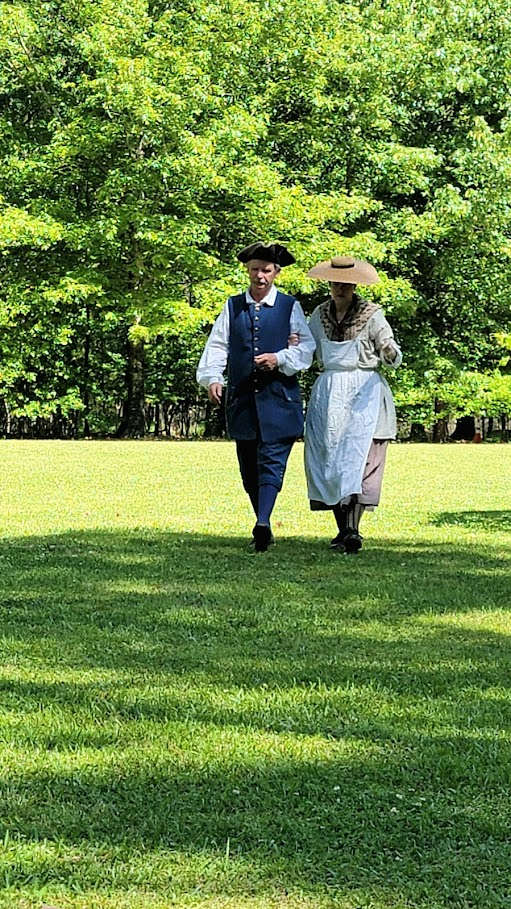
Spring is here and all my living history friends have been anxious to pack up their tents and other odd accoutrements and meet somewhere historical for a taste of life past. My chosen era is the French and Indian War which is the North American portion of the global Seven Years War.

One war tends to lead to other wars in the 18th century. The War of Austrian Succession was the precursor to the Seven Years War and was a conflict to determine who would inherit the Habsburg monarchy. It seems to have been the practice for monarchs to marry off sons and daughters to establish alliances with other countries. Consequently, when a monarch passed without heirs there were any number of near relatives from many countries that wanted to claim their right and were willing to fight for it. Wouldn't it have been easier if they'd been allowed to marry for love?
Anyway, the War of Austrian Succession ended in 1748 leaving many issues unresolved. Britain, France, and Spain were still arguing about their colonies in North America and the Caribbean. In Europe there were territorial disputes between Austria, Germany and Prussia. Needless to say the Seven Years War was actually the first World War for all accounts. Battles were fought on the North American continent, Caribbean islands, and in Europe.
After a few centuries of colonization, Britain had established colonies mainly on the eastern coast, east of the Appalachian mountains. Conditions were getting crowded and some adventurers looked westward and saw the land of opportunity. The problem was that the French already considered that area to be under their control. The French had not colonized this area with many permanent settlements but used this large area for trading purposes. They had established settlements in the north (Canada) but primarily were content for the hunters and trappers as well as Native Americans to supply furs and other trade items obtained from this area to France.

The noted beginning of the French and Indian War in North America actually was started by none other than George Washington. Then an inexperienced 22 year old serving in the British Army, he and native allies of the British ambushed a French diplomatic party. The previous "disagreement" turned into all out war after this lasting until the Treaty of Paris in 1763. France lost the war and with it they lost most of the lands they had claimed.
Admittedly, this is a greatly oversimplified view and may not stand up to serious fact checking. My purpose is only to peak your interest and not supply you with details that must be footnoted. The history is really very interesting and I encourage readers to find out more. Most historians will say that the War for Independence may not have been fought if it were not for the French and Indian War.
The local state park near my home, Fort Massac, was the last French fort built in North America. Although it saw no conflicts during the war it has an interesting history and is the reason that the local group of reenactors of which I belong portray French military, allies, camp followers, and habitants (locals). We get together monthly at the park to demonstrate various things about life during the mid 18th century when the Fort was built. We also love to travel to other sites with history dating to the French and Indian War to camp and interpret our roles to the public.
We recently returned from Fort Toulouse National Historic Park in Alabama. This was the first camping event we had participated in this year. While this is a small event it was a lot of fun. The park has replica French and American forts, Mississippian Indian mounds, a small gift shop/visitor center, hiking trails, river access and a campground. The weather was perfect, sunny and warm but breezy enough to be comfortable. It takes quite a bit of time, effort and expense to participate in events such as this but the rewards are worth it to me.
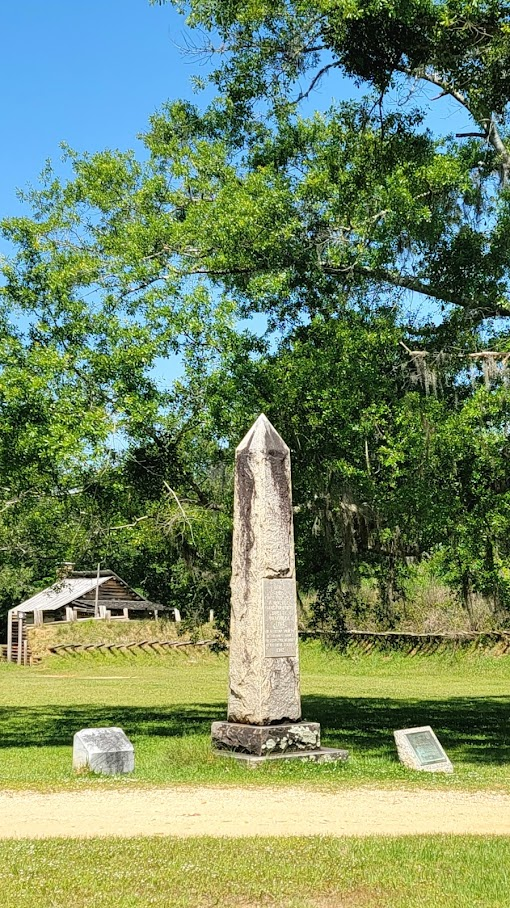
The location for the event is about as far as I would be willing to travel as it took us a full day to get there counting stops along the way. Arriving later in the afternoon we had enough time to set up our camp and head to town for dinner. We had also allowed ourselves an extra day before the event started to check out the park and scour any local antique stores for bargains. Several of us came away with some good deals on items we could add to our living history "kit".

Fort Toulouse has a much larger event in early November known as Frontier Days, but this one was perfect for getting used to our gear again after being stored away for the winter and catching up with some fellow reenactors we see only at events. The French Fort is inhabited during the event by demonstrators of various skills and occupations and is the site of cannon and firearm demonstrations. There is also a Native village just outside the Fort where those portraying Natives camp. Sitting around a campfire at night, sharing stories, cooking over a fire, taking walks on the grounds and in the park, taking pictures and learning history are activities I love. I am so glad to have become a part of this group of people that seem to love all the same things as I do. We were even treated by the Alabama Dutch Oven Society with a Dutch Oven Gathering (DOG) of delicious foods.