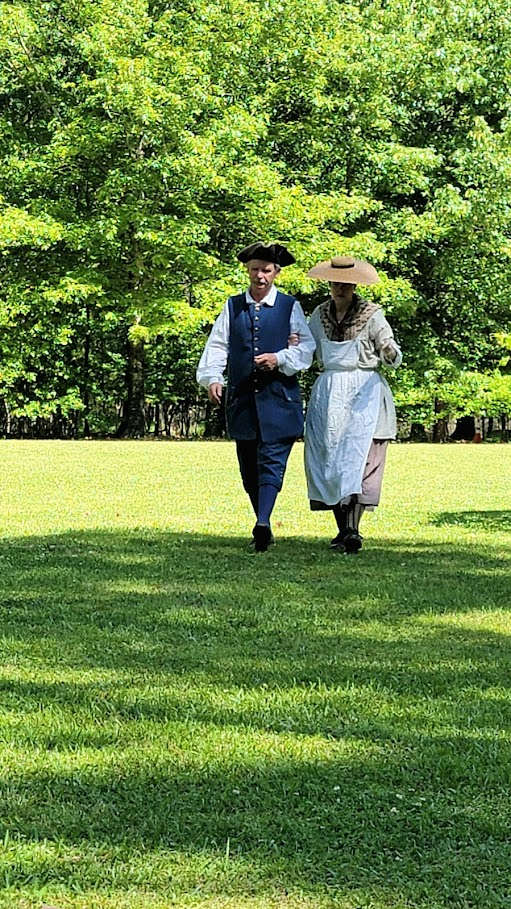
Showing posts with label reenacting. Show all posts

Monday, May 2, 2022

Living History Season Begins

Spring is here and all my living history friends have been anxious to pack up their tents and other odd accoutrements and meet somewhere historical for a taste of life past. My chosen era is the French and Indian War which is the North American portion of the global Seven Years War. 


One war tends to lead to other wars in the 18th century. The War of Austrian Succession was the precursor to the Seven Years War and was a conflict to determine who would inherit the Habsburg monarchy. It seems to have been the practice for monarchs to marry off sons and daughters to establish alliances with other countries. Consequently, when a monarch passed without heirs there were any number of near relatives from many countries that wanted to claim their right and were willing to fight for it. Wouldn't it have been easier if they'd been allowed to marry for love? 

Anyway, the War of Austrian Succession ended in 1748 leaving many issues unresolved. Britain, France, and Spain were still arguing about their colonies in North America and the Caribbean. In Europe there were territorial disputes between Austria, Germany and Prussia. Needless to say the Seven Years War was actually the first World War for all accounts. Battles were fought on the North American continent, Caribbean islands, and in Europe. 

After a few centuries of colonization, Britain had established colonies mainly on the eastern coast, east of the Appalachian mountains. Conditions were getting crowded and some adventurers looked westward and saw the land of opportunity. The problem was that the French already considered that area to be under their control. The French had not colonized this area with many permanent settlements but used this large area for trading purposes. They had established settlements in the north (Canada) but primarily were content for the hunters and trappers as well as Native Americans to supply furs and other trade items obtained from this area to France. 


The noted beginning of the French and Indian War in North America actually was started by none other than George Washington. Then an inexperienced 22 year old serving in the British Army, he and native allies of the British ambushed a French diplomatic party. The previous "disagreement" turned into all out war after this lasting until the Treaty of Paris in 1763. France lost the war and with it they lost most of the lands they had claimed. 

Admittedly, this is a greatly oversimplified view and may not stand up to serious fact checking. My purpose is only to peak your interest and not supply you with details that must be footnoted. The history is really very interesting and I encourage readers to find out more. Most historians will say that the War for Independence may not have been fought if it were not for the French and Indian War. 

The local state park near my home, Fort Massac, was the last French fort built in North America. Although it saw no conflicts during the war it has an interesting history and is the reason that the local group of reenactors of which I belong portray French military, allies, camp followers, and habitants (locals). We get together monthly at the park to demonstrate various things about life during the mid 18th century when the Fort was built. We also love to travel to other sites with history dating to the French and Indian War to camp and interpret our roles to the public. 

We recently returned from Fort Toulouse National Historic Park in Alabama. This was the first camping event we had participated in this year. While this is a small event it was a lot of fun. The park has replica French and American forts, Mississippian Indian mounds, a small gift shop/visitor center, hiking trails, river access and a campground. The weather was perfect, sunny and warm but breezy enough to be comfortable. It takes quite a bit of time, effort and expense to participate in events such as this but the rewards are worth it to me. 
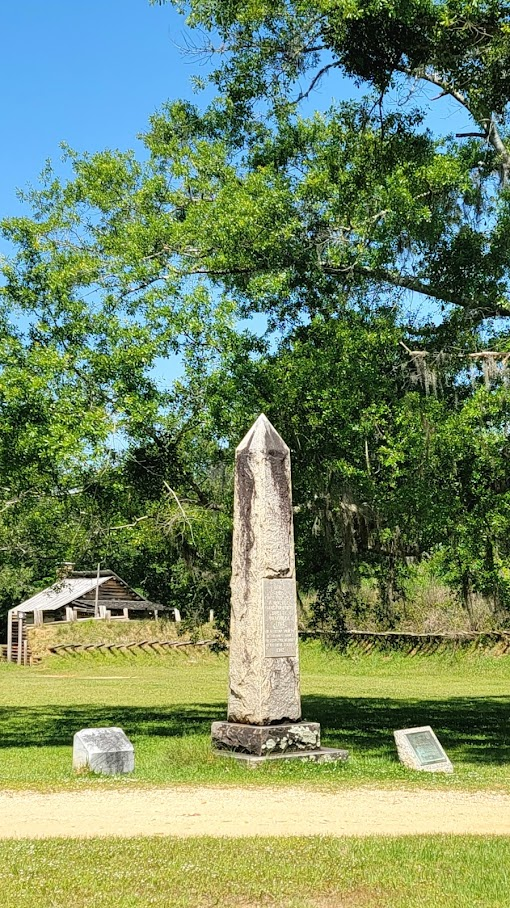

The location for the event is about as far as I would be willing to travel as it took us a full day to get there counting stops along the way. Arriving later in the afternoon we had enough time to set up our camp and head to town for dinner. We had also allowed ourselves an extra day before the event started to check out the park and scour any local antique stores for bargains. Several of us came away with some good deals on items we could add to our living history "kit". 


Fort Toulouse has a much larger event in early November known as Frontier Days, but this one was perfect for getting used to our gear again after being stored away for the winter and catching up with some fellow reenactors we see only at events. The French Fort is inhabited during the event by demonstrators of various skills and occupations and is the site of cannon and firearm demonstrations. There is also a Native village just outside the Fort where those portraying Natives camp. Sitting around a campfire at night, sharing stories, cooking over a fire, taking walks on the grounds and in the park, taking pictures and learning history are activities I love. I am so glad to have become a part of this group of people that seem to love all the same things as I do. We were even treated by the Alabama Dutch Oven Society with a Dutch Oven Gathering (DOG) of delicious foods.  


We were sad for the event to end on Sunday and began our packing up. Because of the long drive we were allowed to stay in the barracks in the Fort on Sunday night to get an early start driving home the next day. I had not stayed in historic barracks on a rope bed with a straw tick mattress before. I have to say it was a little dark and damp and we laughed as we went to bed about all the dangers we might encounter in the night. But we slept well enough and were up early to start the long ride home (with a few additional antique shop stops) and planning of our next living history adventure. 


Friday, April 30, 2021

Travels in Time

I have finally finished cleaning, reorganizing and packing away my living history gear from my recent event. I was happy to get back to one of my favorite pastimes. Last year almost all events were cancelled and I was only able to attend one public event. So when the opportunity to travel to Indiana for the Bridgeton Rendezvous presented itself I quickly talked some friends into going and we were not disappointed. 

When we arrived in Bridgeton I realized I had visited this charming place before. My husband and I had explored many of the covered bridges in this area several years ago. Bridgeton is a very small historical town in Indiana southwest of Indianapolis. Indiana boasts many covered bridges and the Bridgeton covered bridge is famous for the only bridge over a waterfall which makes for very scenic photos. The current bridge was rebuilt in 2006 following a fire that destroyed the bridge. 


At the foot of the waterfall is another notable historic building, the Bridgeton Mill. This is the oldest continually-operating mill in the midwest and has been family owned since 1823. The current owner continues the ongoing restoration while milling corn and wheat with 200 year old French Buhr stones. Samples of his milled products are available for purchase as well as other small items in the Mill store. 


The sleepy town of Bridgeton was placed on the National Register Historic District in 1992 and boasts shops, homes, an original 1822 log cabin, post office and other buildings. Many shops are only open on weekends during the summer or during festivals. The Bridgeton Covered Bridge Festival which begins the second Friday in October and lasts 10 days is the biggest event of the year with approximately 2 million people reportedly visiting the area. 


The event that drew our attention was the Bridgeton Rendezvous, a re-enactment of the 1750s to 1840s time period. The event is hosted by the Case family and centered around the original Case 1822 Log Cabin. In addition to vendors selling period appropriate items there were also activities for the reenactors to participate in such as a black powder shoot, bow shoot, skillet throw, Friendship fire and a shared meal. 

We arrived on Thursday afternoon to set up our tents and unload our supplies. The weather forecast predicted near freezing temps that night and some rain over the weekend but I was prepared. It was a little chilly that night but I slept well underneath multiple layers of wool blankets. When I awoke one of my fellow campers had already started the fire and made the coffee. Thank you Scottie!!!

Most events such as this host a "schooldays" on the Friday before the event with local school children attending. Unfortunately it was cancelled this year so we dressed in our 18th century finest and walked the historic streets to scope out the town and mill. We talked with the owner of Bridgeton Mill and learned the history of the building and what work is taking place in the restoration, purchased buckwheat flour, muffin mix and blueberry syrup. The owner gifted us a sample of the buckwheat pancake mix. This made for a very tasty breakfast the following day. 

We also talked with Celia Case who had been the one to invite us to this event when we met her last year. Her family owns the 1822 log cabin which is original to the county but has been moved to the current site. The cabin was built by her great grandfather and has been in the family ever since. During the event she informed visitors about the history of the cabin and town, cooked on the hearth and directed the events. 

The other reenactors were all well known to each other but a friendlier group of people you could not imagine. We must have interacted with each and every one as they stopped by our camp to say hi and share stories or information. 

Also present at this event was a couple that I have seen at previous events. They are always entertaining and provide portrayals of several different personas. This weekend they were present as Parson John and Maggie Delaney, his indentured servant. She gave a presentation in which she told her story as an Irish immigrant that arrived in the colonies as an indentured servant with her family and all the hardships she had endured. It is a very moving story and based on historical accounts. Parson John delivered a religious service on Sunday morning with a good message. A few years ago I encountered this couple portraying body snatchers. They do such a fantastic job portraying first person characters that I follow them on Facebook and watch their videos on YouTube. You can find them on Facebook by searching "Parson John & Maggie" and a search on YouTube of "Maggie Delaney" will provide several videos of Maggie's impersonations. 


As always some of the best times during these events is sitting around a campfire late at night talking with friends, eating food cooked over the campfire and spending time with like-minded people who enjoy history and realize the importance of it. We learned that onions roasted in the coals make a tasty treat and you can't always count on weather reports as, thankfully, the rain held off all weekend. 

Too soon, Sunday afternoon arrived and we had to take down our tents, pack our gear and start the long drive home. As I usually do following the fun I try to reorganize and reassemble my gear in a more efficient manner for the next event knowing full well that there is no perfect way to pack for these events. This took me a few days and then I have to rest up and begin thinking about the next Reenactment!

You may have events similar to this in your area. I encourage you not only to attend but interact with those that are portraying historical characters. We love to tell our story or give you information that you may not have learned in school. And although we can never know exactly what it was like to live in another time we can gain some perspective of what they experienced in day to day life. 

Scottie and Bob at the Case Cabin

me in front of our camp

Our gang

camp of a voyageur

Celia Case at Skillet Throw

Chicken on the hearth

Spinning demonstration

Hand knitted caps and other goods

Links for further information: 
http://www.bridgetonindiana.com/attractions/index.htm

https://www.coveredbridges.com/covered-bridges

Friday, July 17, 2020

Living Historically

Living history is one my passions and I was fortunate to be able to attend an event last weekend. For me participating in living history events checks all the boxes. I am outdoors, camping, spending time with friends, and learning history. 

My Native interpretation

I wasn't always so enamored with history. During high school I thought it rather boring because it seemed to be more memorization of dates and important events. It wasn't until I was required to take some history classes in college that I learned the real interest in history to me is not those details but in learning about how people lived and how these events affected their daily lives. I remember when it first hit me. My instructor tossed a raw cotton boll on my desk and asked me to clean it. His point was to demonstrate how important the invention of the cotton gin was to cotton growers. Since that time I have been hooked on history. 

My favorite reading for years has been historical fiction. I especially love it when the author puts his characters in important events in time and demonstrates how these events impacted the persons living through them. At the same time as I was reading and soaking in as much as I could about the time periods I thought most fascinating I was also attending the annual living history event or reenactment in my home town. As a visitor I loved walking the grounds and seeing the reenactor's camps, clothing, and supplies. Some told their stories and others demonstrated a skill or task. I yearned to be one of them but didn't think it possible with kids, work and all my obligations. Years later I belonged to an organization that sponsored a food booth at the local reenactment and I was soon making and wearing my own historical costume. 

Then about seven years ago a casual friend who knew of my interests invited me to attend an event as a participant. What a life changing experience that turned out to be. I was hooked even harder on history but this time on living and interpreting history and I also found a treasured friend. My friend portrayed a captive of the Native Americans and so this is the role I was to assume also. I slept on the ground under a tarp and couldn't have been happier. We made our meals over the fire, hauled wood and water and talked to school kids telling them the story of our captivity. I could hardly wait to do this again. 


Soon after this I contacted our local reenactment unit. At first I felt I was being put off but looking back I understand now how my eagerness is so common during events but most people soon forget once they get home and resume normal life. Having found my new  passion I was not to be deterred. I continued to come to their meetings and make a pest of myself. I realized they needed somebody to work the neglected historic garden and I happily volunteered and began managing that. I asked thousands of questions, began making better clothes and buying supplies for camping. After about a year of this I finally began feeling like I belonged. I learned so much and made some wonderful friendships along the way. Now I eagerly anticipate the next event and continuously think about how to improve my presentation. My reading has evolved from historical fiction to reading actual historical accounts and perusing primary and secondary sources of information in order to more accurately portray a person from another time. 


As with any hobby or interest this year of Corona Virus has not been good for the reenacting community. Events are being postponed or cancelled all over. Even major historical sites are having problems with how they interact with the public. So I was elated to find an event near enough to attend last weekend and I began trying to gather my group of fellow reenactors together. The event is called Colonial Market Days and is held in Lebanon, IN. This was only the second year for this event and I expected it would not be a large event so social distancing concerns could be easily managed. The sponsors of the event did an excellent job and we had a wonderful time. It was so good to be able to get together with my historical friends, put up our tents and transition back to a simpler time. I'm thankful we took a chance and attended as now it looks as if this may have been our only opportunity for reenacting this year. 

The time period that my group interprets is the French and Indian War or Seven Years War as it is known in other areas of the world. This conflict is not as well known in the US as the Revolutionary War and many people never learn the importance of this war. Prior to the war the French occupied the lands west of the Appalachian mountains and north of the Ohio River into Canada. Their main interest there at that time was the fur trade, a very lucrative business. The French made efforts to colonize the region but aside from certain locations the region was not as heavily populated as the English controlled east coast. Between the fur trade and the desire for land the English colonists began infiltrating the region claimed by the French in attempts to establish trade for themselves. George Washington as a young officer was actually the spark that ignited the war when he led a unit of English militia in firing on a French diplomatic mission. In the end the English defeated the French and gained control of lands west to the Mississippi River and north to the Lakes region. This war, however, incurred a huge debt for England and their parliament subsequently began imposing taxes on the colonies to reduce this debt. The rest as they say is history. Some believe that if the French had won the Seven Years War there may never have been a revolution and a United States of America. 

While I can never fully experience what life was like in the 1750's I try to get as close as I can. I am always wanting to make it as real as possible. I do this by starting fires with flint and steel, cooking over a fire, and hand sewing my clothes with period appropriate patterns and fabrics. I've learned how to load and shoot a flint lock musket, which herbs are used medicinally, and many other things. I portray different persons from that time period. Most of the time I am a widow that follows the French troops. My primary interests in this role are cooking and herbal medicines so if I'm telling my story I am working as a nurse with the Army. Other times I portray a white woman that was captured as a child and adopted by the Natives. As this person I dress in Native American clothing and live as a Native. The French had closer associations with the Natives than the English and many French men found Native wives. My daughter's family including my grandchildren have also joined me at some events and thoroughly enjoy the living history lifestyle. 


In a usual year there are numerous living history events throughout the United States and this hobby is enjoyed in other countries also. Each event focuses on a specific time period from early colonial times to the War of 1812, westward expansion, Civil War, etc. Different regions of the country interpret the history associated with their region. There is truly something for everyone. If you have the opportunity to visit an event in your area or while you are traveling I encourage you to attend. But don't stop at just attending and observing. Strike up a conversation with some of the interpreters and ask questions. You'll be surprised how knowledgeable most interpreters are about history and how they love to talk about it. 


Let's try this again ...

Ft. Massac State Park My misadventures derailed. Life has a way of happening like that. When I started this blog 5 years ago I had plans for...